My kid doesn't like sports. What now?
What a team gives a kid, and where to look for one.


Short answer: nothing is wrong with your kid. Fewer than half of kids play a team sport on a regular basis. What's worth replacing is what a good team gives them: the same people every week, a coach who knows them, a season that builds to something, and a job other kids count on them to do. Before you sign them up for the next thing, look at what they already love, and find a team built around that. For a lot of kids, that's video games.
Is something wrong if my son or daughter doesn't like sports?
No. In the Aspen Institute's State of Play 2025 report, no more than 42% of boys ages 6 to 17 have played a team sport regularly in any of the last nine years. For girls, the high was 37%. Your kid has plenty of company.
So the worry is usually about something else. An educator said it well in a video we made about our program:
“It's really important to be in an environment where you're working on a team, you're seeing what you're made of... and so if your kid's not into sports, how are they going to get that?”
I was that kid. Here's how it went for me.
I was the kid who didn't like sports
I grew up in Sugar Land, Texas, in a family of doctors. School ran from 7 to 3. After that came piano, cello, swim team and whatever else was on the calendar until 8, then homework, then bed. In high school I was on the tennis team. It was not good.
None of it took. I wasn't into sports and I wasn't into fine arts. I had a lot of social anxiety, and I didn't feel connected to much of anything. I've written about why some quiet and autistic kids talk more online.
The one thing I loved was the thing my parents liked least. When I was 15, my older brother and four of his friends would come over after school and play League of Legends in our living room, all on one team, laughing and yelling. I wanted to feel that.
I didn't get it until college, when I joined the League of Legends team at UT Dallas. We had team dinners. I learned who at home was rooting for each of my teammates. When we won our region, my mom called on video and showed me the room: my family, watching our match on the big TV.
Later that spring I was home on the couch, rewatching "Inception," when my mom slapped me on the back of the head and asked why I was watching a silly movie when I should be practicing. I went to my room, queued up a game and cried. For the first time, I felt like my mom saw me. The Athletic opened a story with that moment in 2023.
I was 21. I started EKUZO so a kid could have that at 9, with a coach.
What should I look at before I sign my kid up for the next thing?
Everything my parents signed me up for was a fair guess. The thing I loved was in our living room the whole time.
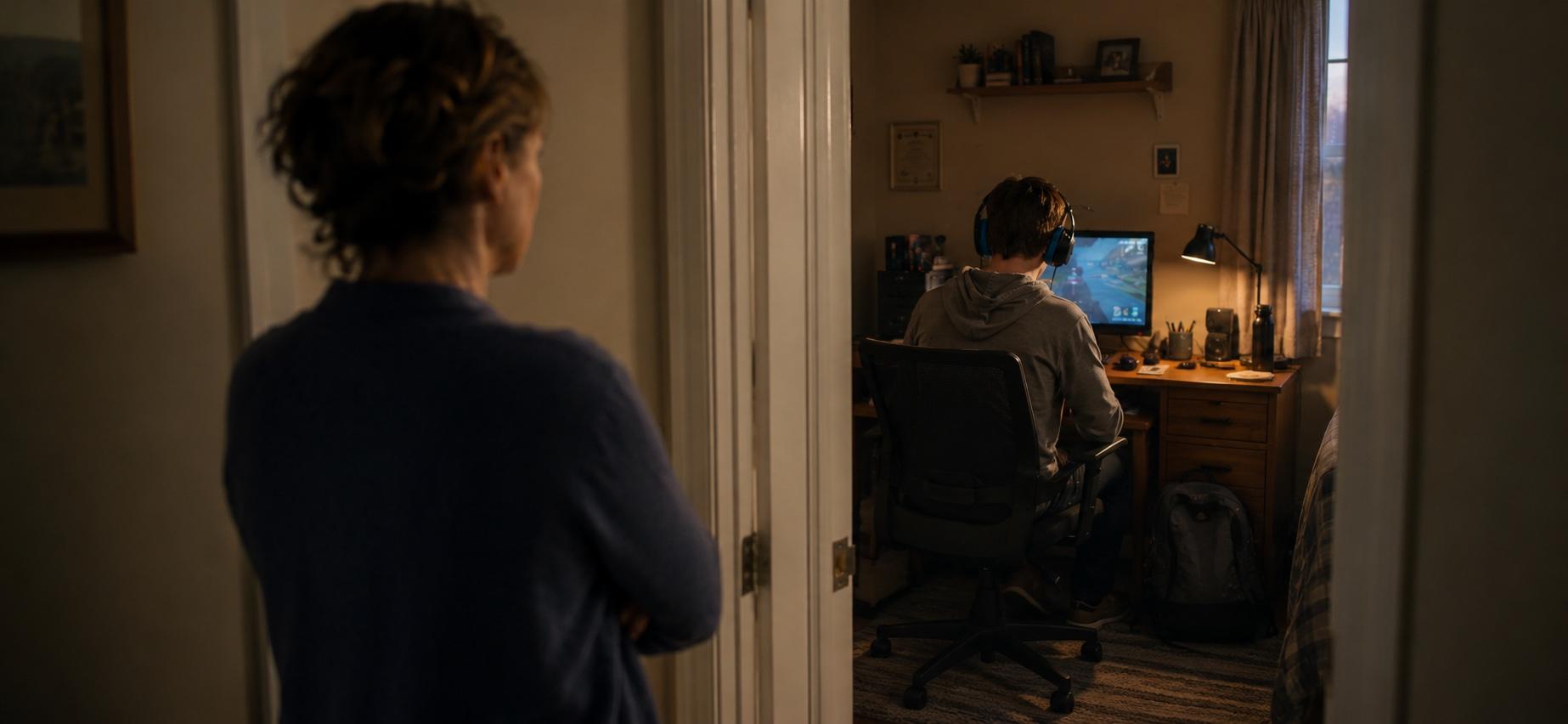
So before the next sign-up, watch for a week. What does your kid do when no one is making them? What do they talk about until you stop following? Who are they with when they do it?
For some kids that's drawing, taking things apart or the drums. Then stage crew, robotics or band could be their team. For a lot of kids it's a video game. You may not love what you find. My parents didn't. Start there anyway.
What does a team give a kid?
Once you know what they love, look for four things around it.
- The same people every week. That's how kids make real friends.
- A coach. An adult who knows your kid and tells them the truth kindly.
- A season that builds to something. Opening night, a concert, a tournament. A date on the calendar gives practice a point.
- A job other kids count on. I learned you can only build something special with a team.
Could a video game team be your kid's team?
If your kid plays every day and has never clicked with a sport, it's worth a look. A parent in another of our videos described it this way:
“We're not a super athletic family, so we don't have baseball or soccer or those sorts of things to go to, but EKUZO in a huge way sort of fills that same sort of role.”
Colleges came around to it while I was still playing. After our season, the athletics director at UT Dallas emailed me. The school made us varsity athletes, with jerseys, trainers and scholarships. The game stayed the same. The adults around it changed.
Season 01, our coached team season, puts kids 9 and older on teams of five with the same coach and the same teammates all season. They practice online twice a week, and the season builds to a tournament in the spring. They play League of Legends, and most kids start from scratch.
A gaming team doesn't replace moving. We teach our players that the body and the mind are connected: to play your best, you have to be at your best. So our practices include pushups and water, and kids still need to get outside.
If your kid's friends are mostly online, read when your son's only friends are online. If logging off is the nightly fight, here's how to get your kid off the game without one. If your kid already plays every day, here's how to tell if they're getting better at a game or just playing more.
Common questions
My son doesn't like sports. Is that a problem?
No. Most boys don't play a team sport regularly, and that's been true for years. Look for a team built around something he does care about.
What if my daughter doesn't like sports?
Same answer. Most girls don't play a team sport regularly either, so she has company too. Look for the same four things: the same people every week, a coach, a season and a role.
Should I make my kid play a sport?
That's your call, and plenty of families have a "one activity a season" rule. If you have one, let your kid choose the activity.
What activities are good for a kid who isn't athletic?
Start with what they already love. A kid who draws might like stage crew. A kid who takes things apart might like robotics. A kid who plays video games every day might like a coached team.
My kid only wants to play video games. Does that count as an activity?
Playing alone in a bedroom is a hobby. The same game on a team, with a coach, a schedule and a season, is an activity.
Sources
- Aspen Institute Project Play, “State of Play 2025: Participation Trends” (SFIA data, ages 6 to 17, 2024). https://projectplay.org/state-of-play-2025/participation-trends
- Daniel Brown, “With League of Legends world finals approaching, more colleges are welcoming esports,” The Athletic, November 17, 2023. https://www.nytimes.com/athletic/5069385/2023/11/17/esports-league-of-legends-college-gaming/