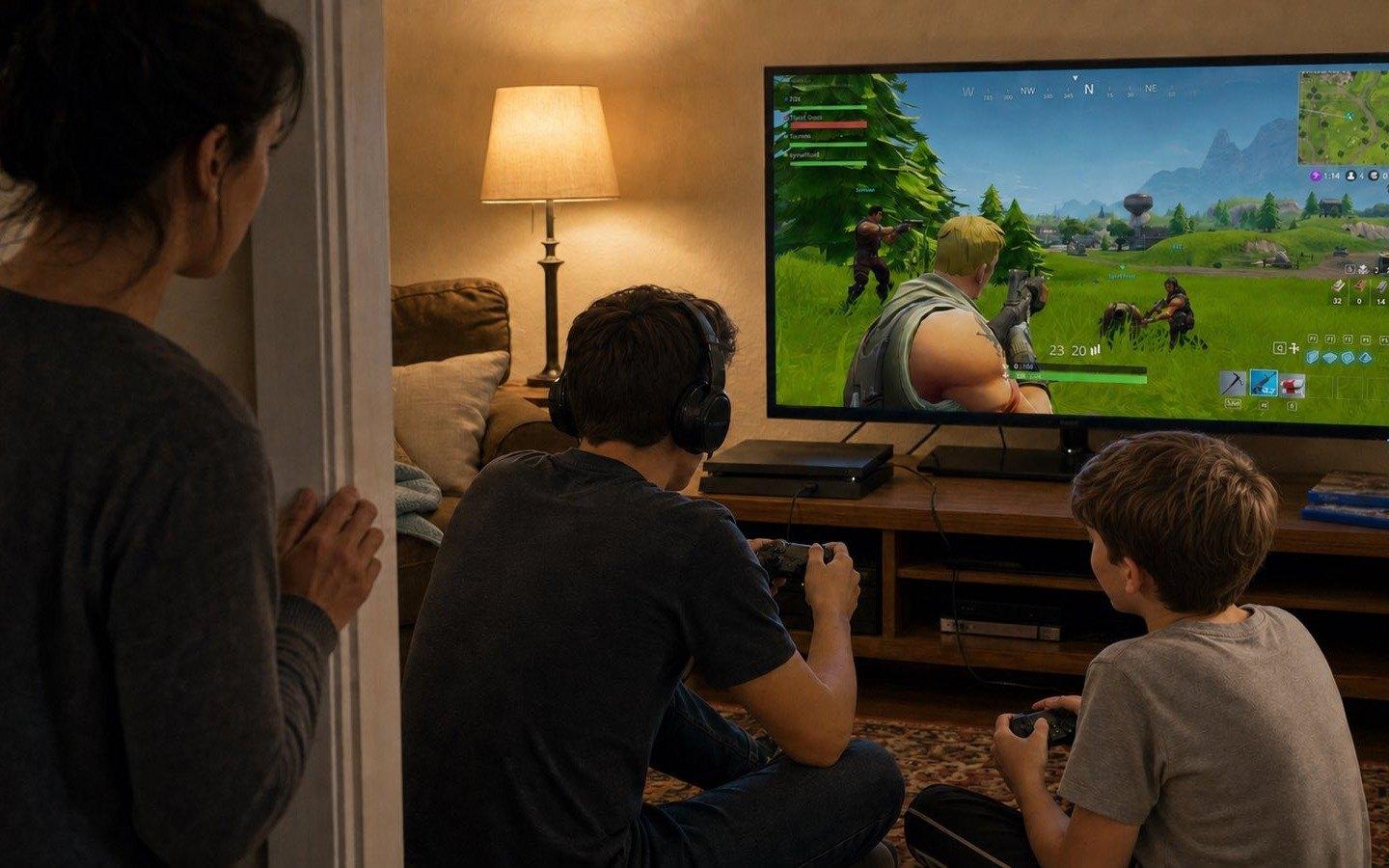
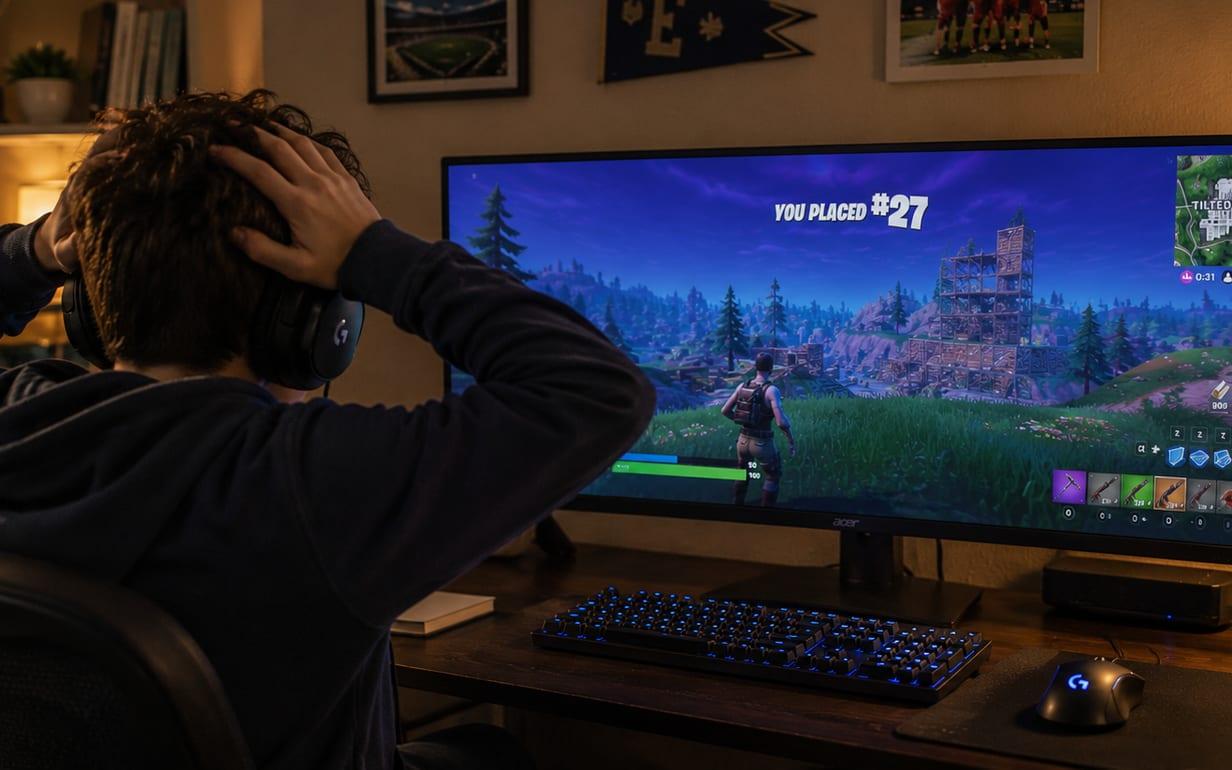
How do I get my kid off the game without a fight?
Count matches, not minutes. What to ask before they start, what to say at the end, and what to do when it goes sideways anyway.
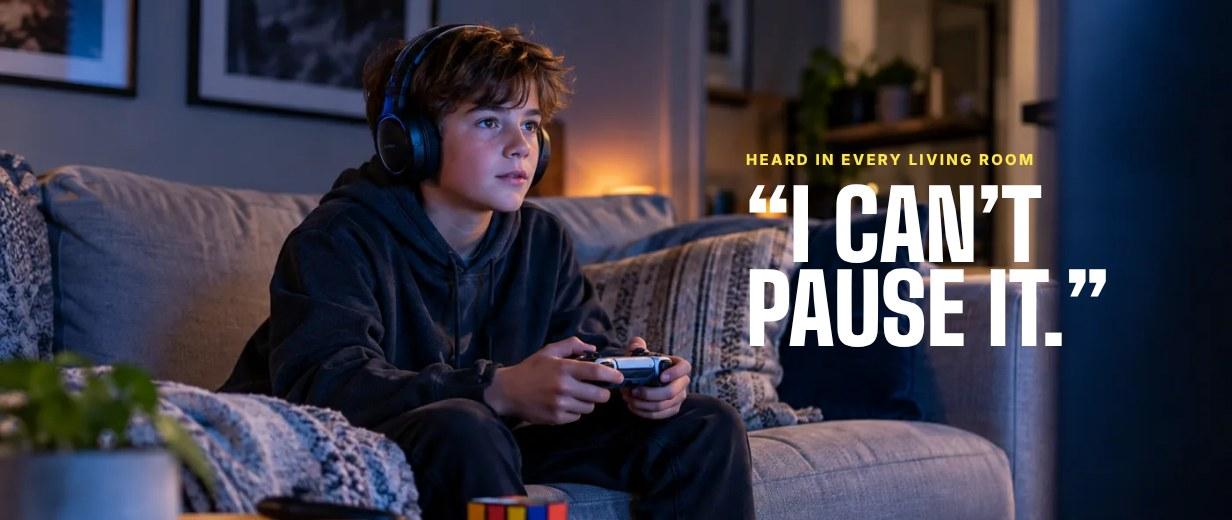

Short answer: end at a natural stopping point, and agree on where that is before the game starts. Online team games can't be paused. In a game like League of Legends, a kid who leaves lets four teammates down and gets penalized by the game. So ask what they're playing and who with, count matches instead of minutes, and set the number together. When the end is close, walk in and watch the finish with them, then keep your words short. If it still blows up, skip the lecture, give them somewhere to cool off, and talk it through later when everyone's calm. Most of these fights come from the distance between what you expect and what they expect, and a two-minute conversation before they start closes most of it.
Why won't my kid get off the game when I ask?
When we ask parents which line they hear most at home, “five more minutes” comes first, with “I'm almost done” and “I can't pause it” right behind. Replying to one of the most-shared posts in a recent viral gaming wave, a parent asked the question plainly:
“It may but how do you alleviate the attitude your kid gets when you make them get off of it”
A parent, replying on X
I was that kid. Gaming was where I felt most alive and connected. I wasn't just playing, I was with my friends. My mom would call me down for dinner or homework in the middle of a match and expect me to log off right then. She didn't see the four people on the other side of the screen who were counting on me, or that I was practicing something on purpose. It was almost always a fight when I was a teenager, and it didn't let up until she understood.
Here's what I wish we'd both known then. Your kid usually has a real reason, and each one is worth understanding.
They can't leave. In a team match the game keeps going without them, and their team plays a player short. In League, Riot's rules say a game your kid leaves will “always count as a loss, regardless of whether or not your team is victorious,” and repeat leaving brings queue delays and then lockouts of up to two weeks. A penalty also lowers their honor level, which takes away chat, rewards and credibility.
They're close to a goal. “I'm almost done” is often true: a rank, a build, a level. Researchers who interviewed children and parents found that kids, like adults, “struggle to exit play if they have not yet reached a point of closure” (Alsheail and colleagues, 2025). This is the good one. Ask what they're about to finish, and you'll learn what they care about.
They want one more. The end of a match is also where “just one more” starts. That's what the plan before they start is for.
How long is a match in Fortnite, League of Legends and other games?
Rough lengths, from playing all of these:
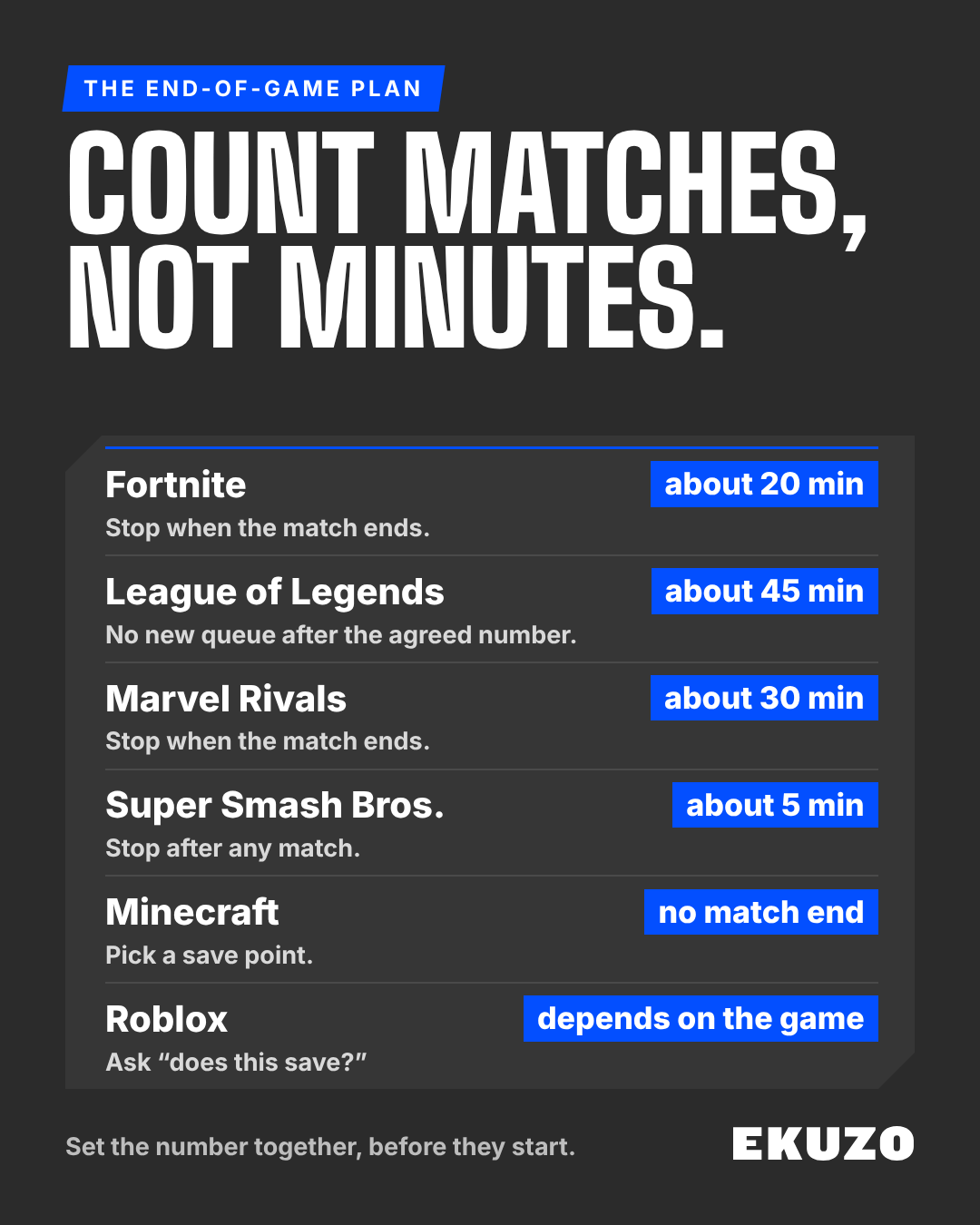
See the match lengths as a table
| Game | One match | Where to stop |
|---|---|---|
| Fortnite (Battle Royale) | About 20 minutes, less if they're knocked out early | When the match ends |
| League of Legends | About 45 minutes, including champion select | When the match ends. No new queue after the agreed number |
| Marvel Rivals | About 30 minutes | When the match ends |
| Super Smash Bros. | About 5 minutes | After any match |
| Minecraft | No match end | Agree on a save point, like the next nightfall or the end of a build |
| Roblox | Depends on the game | Ask “does this save?” and pick the stop together |
Once a team match starts, they're in until it ends, and the game punishes leaving. That makes it a good lesson in planning ahead.
Dinner's in 35 minutes. A League game takes 45. Starting one is starting the fight.
How do I set a gaming limit my kid will actually follow?
This checklist won't fit every house, and a fight that's bigger than a routine needs the right help. For most families, it's the place to start.
- Ask about the session the way you'd ask about a practice. “Who are you playing with? What game?” Once you know they're on a team, a quick check-in replaces yelling across the house.
- Count matches, not minutes. “Two more matches” ends at a moment that makes sense inside the game. “Thirty more minutes” usually ends in the middle of one.
- Set the number together, at a calm time. In a University of Washington survey of 249 families with kids 10 to 17, children found household tech rules easier to follow “when families had developed them collectively and when parents lived by them as well.”
- Say the plan before they play. The American Academy of Pediatrics (AAP) puts it this way: “Before they play, remind your child of the time limit and what their plan is for using that time.” A plan said at the start is an agreement. The same words at the door land as a surprise.
- Let the game signal the end. If you use a timer on the console or computer, set it to alert and skip the automatic shut-off, which pulls your kid out mid-match.
What do I say when it's time to get off the game?
Less than you think, and say it from the room. Most games build to a big finish, so walk in a few minutes before the match ends and watch it with them. The AAP calls sitting near your child and “quietly observing what they're doing” a way to “build a bridge back to reality.” When the match ends, use as few words as possible, as the AAP advises. “Good game. That's the last one tonight” is plenty.
What if my kid rages when the game ends?
Don't argue the rules in the moment. The AAP puts it simply: “a child in meltdown mode can't think logically.” The conversation can wait until tomorrow.
Give them somewhere to go: a quiet spot, or for older kids something they like even more, like a quick run or a favorite song. In our sessions, kids do pushups and drink water, and both are easy to borrow at home.
Don't let the outburst win the game back. If it does, the AAP says, the kid “will keep doing it.”
Check the plan once a week. Ask what's working, and let your kid help fix what isn't.
Could a gaming coach be the missing piece?
Sports teams handle the end without thinking about it. Practice starts at 4:00 and ends at 5:30, and nobody argues with the clock, because the end was set before anyone took the field.
A coach does more than keep the clock. Kids call it crashing out: one bad moment and their mood takes over the rest of the game. Our coaches work with kids on staying grounded through all of it, the wins, the losses and the rough stretches in between. That's the same steadiness you're hoping for when it's time to get off at night.
The end of every EKUZO session is on the schedule before anyone logs in (in Season 01, two 90-minute practices a week), and the coach calls it. What happens after is still your family's plan.
If the fight at your house is about one game in particular, here's how one family handled Fortnite. If you want to know what the hours are giving your kid, read what your kid's gaming is telling you. To find out whether those hours are making them better, here's how to tell if your kid is getting better at a game. And if you'd rather ask a person, my coaches answer parent questions. If your kid never clicked with a sport, read what a team gives a kid and where else to find one. If your kid is autistic or just quiet, read what researchers found about Minecraft and autistic kids.
Common questions
Should I give a five-minute warning before my kid gets off the game?
For team games, usually not. Ten minutes into a 45-minute League match, "five minutes left" means nothing, because the match can't end in five. Ask how long the match has left, or agree before they start that this is the last one. For games without matches, like Minecraft, a warning to get to a save point works.
What if my kid says they can't pause the game?
They're probably right. An online team match keeps going without them, the same as a soccer or basketball game. If your kid were on the court, you wouldn't pull them off mid-game. You'd wait for the whistle. Agree to stop at the end of the match, and agree before they start that no new match begins after the number you set.
How many matches should I let my kid play?
Start with the time you have, then turn it into matches. An hour is one or two League games, two Marvel Rivals matches, or plenty of Smash. Talk it through before they start, so the number is set before the first match.
Is it OK to take away video games as a punishment?
That's your call. If you do, the AAP suggests enforcing limits "supportively rather than punitively." Before it gets there, lean in. Most of these fights come from the distance between what you expected and what they expected.
How do I get my kid off Minecraft or Roblox?
Agree on a stopping point the game understands before they start: a save point, the next nightfall in Minecraft, or the end of a round in a Roblox game. Ask "does this save?" so stopping doesn't cost their progress. Try to understand what they're building before you judge the screen time, and the stop gets easier to agree on.
Sources
- American Academy of Pediatrics (HealthyChildren.org), “Screen Time & Temper Tantrums: Helpful Tips for Parents,” Jenny Radesky, MD, updated March 13, 2024. https://www.healthychildren.org/English/family-life/Media/Pages/Screen-Time-and-Temper-Tantrums-Helpful-Tips-for-Parents.aspx
- AAP Center of Excellence on Social Media and Youth Mental Health, “Setting limitations on tech time,” 2023. https://www.aap.org/en/patient-care/media-and-children/center-of-excellence-on-social-media-and-youth-mental-health/qa-portal/qa-portal-library/qa-portal-library-questions/setting-limitations-on-tech-time/
- AAP, “How to Make a Family Media Use Plan,” updated January 20, 2026. https://www.healthychildren.org/English/family-life/Media/Pages/How-to-Make-a-Family-Media-Use-Plan.aspx
- Riot Games Support, “Away From Keyboard (AFK) FAQ,” updated June 2026. https://support.riotgames.com/en-us/league-of-legends/penalties/away-from-keyboard-afk-faq
- Riot Games Support, “League of Legends Honor Guide,” updated May 31, 2026. https://support.riotgames.com/en-us/league-of-legends/rewards/league-of-legends-honor-guide
- Alsheail, Gerling and Yildiz (2025), “A Qualitative Exploration of How Children and Parents Experience and Structure Disengagement from Games,” Proc. ACM Hum.-Comput. Interact. 9(6), CHI PLAY. doi 10.1145/3748614. https://doi.org/10.1145/3748614
- Hiniker, Schoenebeck and Kientz (2016), “Not at the Dinner Table,” CSCW 2016 (families with kids 10 to 17), via University of Washington News, March 8, 2016. https://www.washington.edu/news/2016/03/08/family-technology-rules-what-kids-expect-of-parents/
- Roblox Creator Docs, “Data stores.” https://create.roblox.com/docs/cloud-services/data-stores
- The parent’s reply on X, in the thread under https://x.com/CoachDanGo/status/2099566382681866270 (captured September 2026).