She banned Fortnite and got her kid back. Then came a new problem.
She's a military mom who banned Fortnite. The ban worked. Then her family found out what else the game had been doing.

Howdy, I’m Muhammad. I’m a rising senior at Texas A&M, and I coach kids in League of Legends for a youth esports startup called EKUZO. This summer, part of my job is listening. I interview parents about gaming and screens, and I write down what actually happens in their houses, because it’s usually more useful than what the internet argues about.
I’d like to tell you about Casey. She’s a mom of two boys who banned Fortnite from her house. The short version, in case you’re standing in your kitchen right now trying to decide whether to ban the game yourself: the ban worked. The kid she’d been missing came back. But then a new problem showed up, one none of the articles had warned her about, because the game had been quietly doing a job in her family, and banning it left the job open.
What she did next is the useful part. She didn’t quit games. She started judging them one at a time, by the kid each one handed back to her.
Why she banned Fortnite
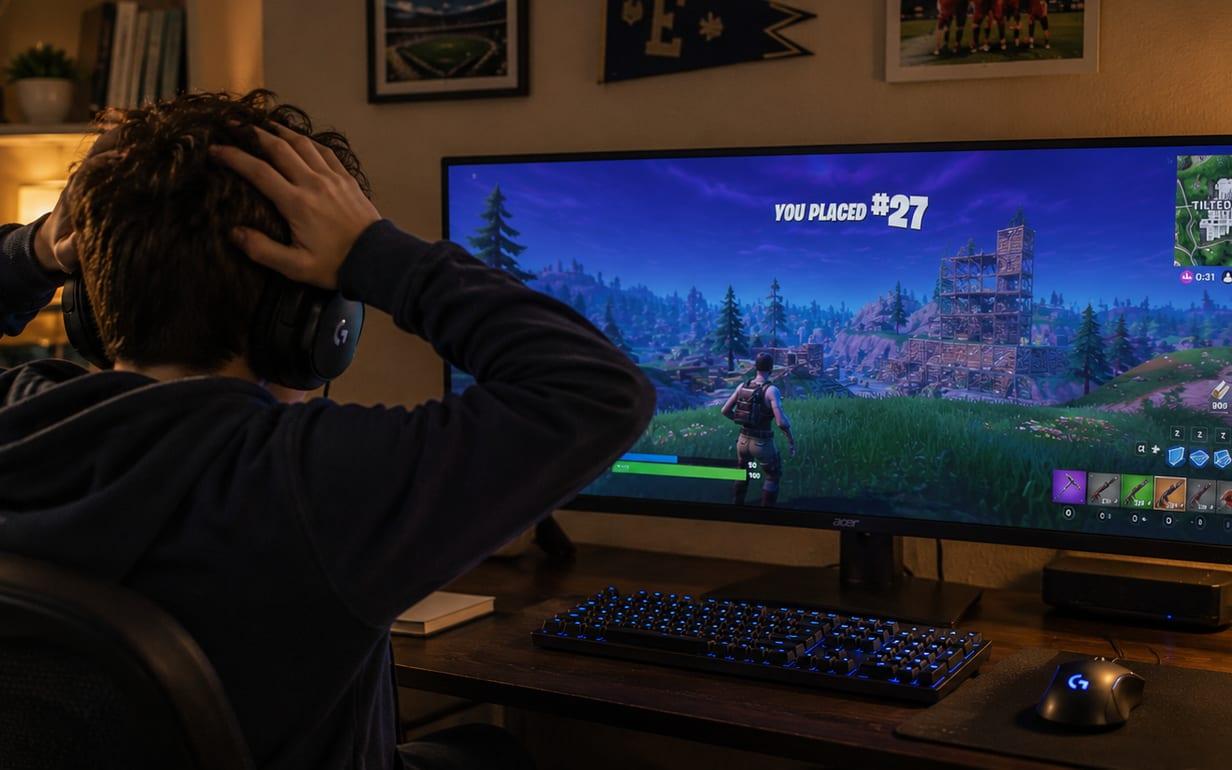
She has a name for what the game did to her house. “Fort-Hole is what I coined the term,” she told me, “for teenagers who play Fortnite and turn into...” and she stopped herself. She didn’t need to finish it. I told her it was a great term and that I was taking it for myself. If you have a teenager and a copy of Fortnite, you’ve met a Fort-Hole: one more loss on a laggy night and there’s somebody in your living room you don’t recognize, yelling at the wifi.
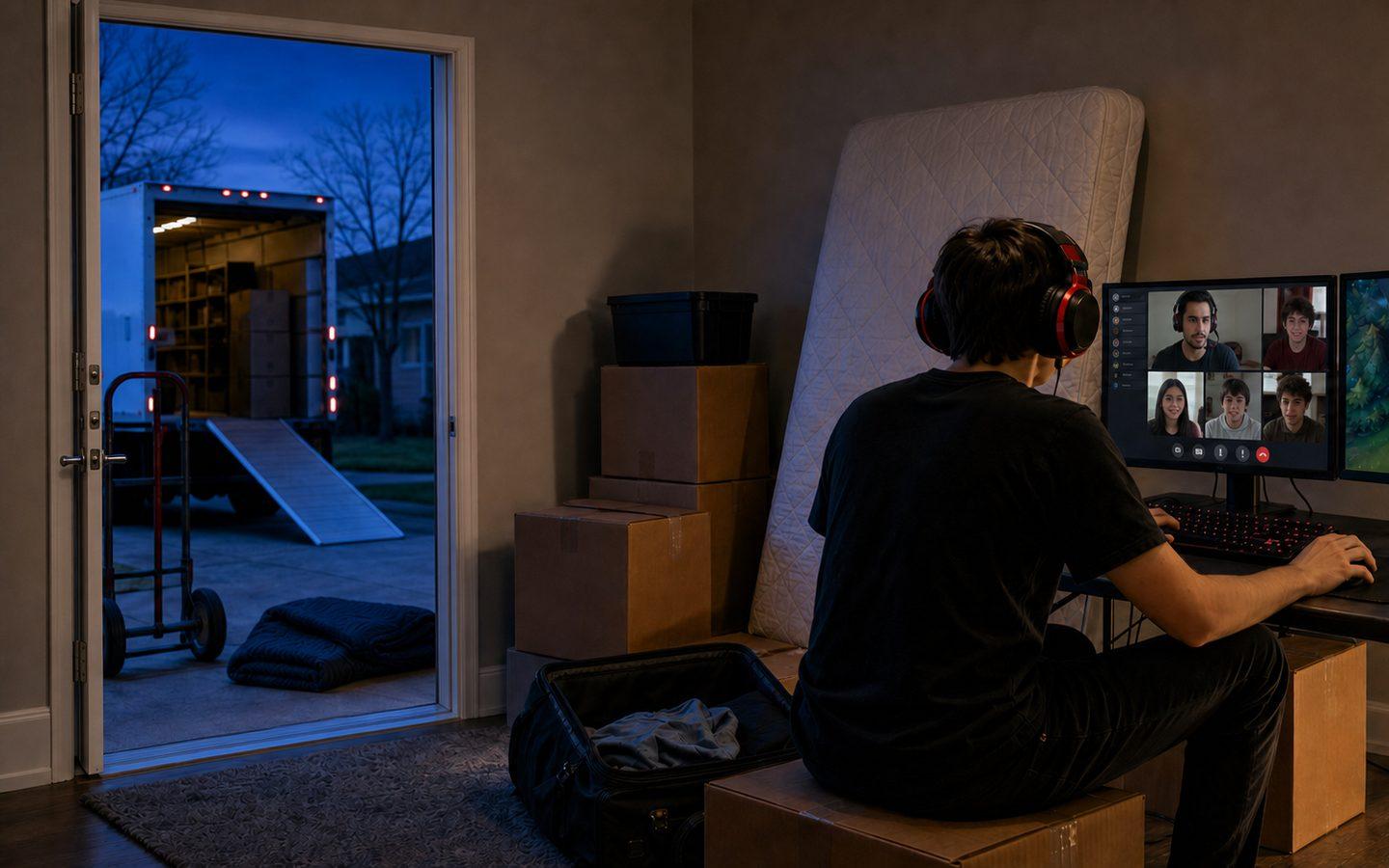
It didn’t start that way. She’s a military pilot, and the job moved her family constantly. One of those moves landed her boys overseas right as COVID locked everything down. An ocean away from everyone they knew, her sons found their people in Fortnite. She let them have it, and her verdict on that season is the most honest sentence about gaming I’ve heard from a parent: “Fortnite, even though I think it’s the devil, had its purpose.”
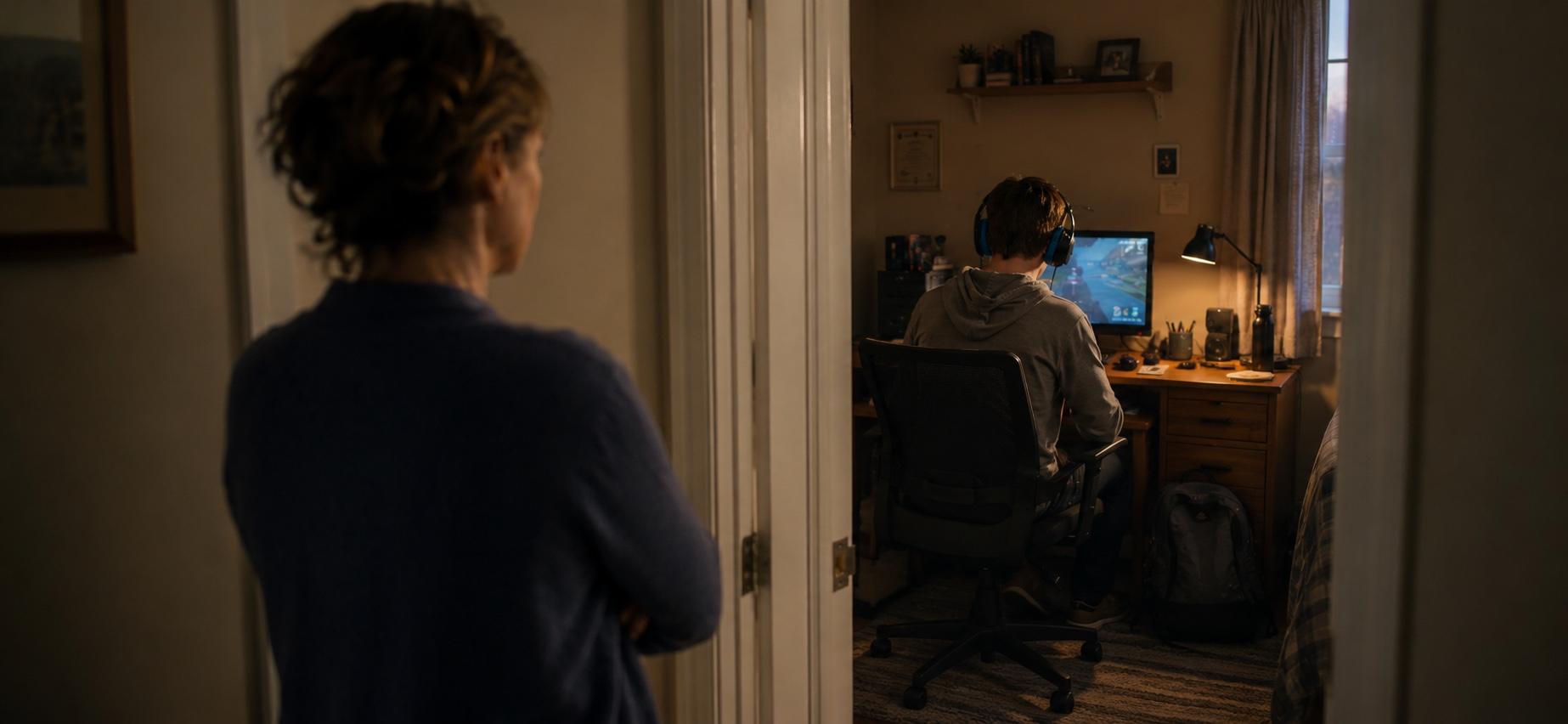
Then the purpose ran out. “I knew my kid acted horribly when he would spend so many hours on Fortnite,” she told me. “I would ground him from Fortnite and then everything he did was to get back on Fortnite.” The punishment had become part of the loop. So the family banned it outright, and her memory of what happened next is one short line of relief: “Oh, [my son] is back.”
The research came after the ban, not before. She read about how the game’s design targets dopamine responses in kids. I told her I’d always thought those mechanics looked like a casino floor, and she went somewhere past agreeing: “They did it intentionally... Where is the ethics of it? There isn’t any.” The record backs her instinct. In 2022 the FTC ordered Epic Games, Fortnite’s maker, to pay $520 million over children’s privacy violations and design tricks that pushed players into unwanted purchases, the largest penalty of its kind at the time.
What the ban fixed, and what it broke
The ban fixed the behavior. Her son stopped orbiting the game, and the kid underneath came back out.
Here’s the new problem. Her boys are different people. One’s a band kid, one isn’t, and they didn’t have much in common. The game she’d just removed had been one of the few places they overlapped. A ban takes away everything a game was doing, and Fortnite had been doing two jobs in her house: hijacking one son’s wiring, and giving two brothers a place to be brothers.
She saw the gap herself. When I asked why her boys play what they play now, part of her answer was honest to the bone: “a little bit out of boredom once Fortnite was banned from my home.”
Nobody warns you about that part. The screen-time argument treats games as interchangeable, one gray mass of hours to be capped. Her experience says the opposite. In her words: some games are manipulative, and “Fortnite for me is a devil and creates little Fort-Holes.” Others were quietly holding her family together. Each game was doing something specific for her kids, and the only way she found out was by removing one and watching what went missing.
Why Red Dead Redemption worked
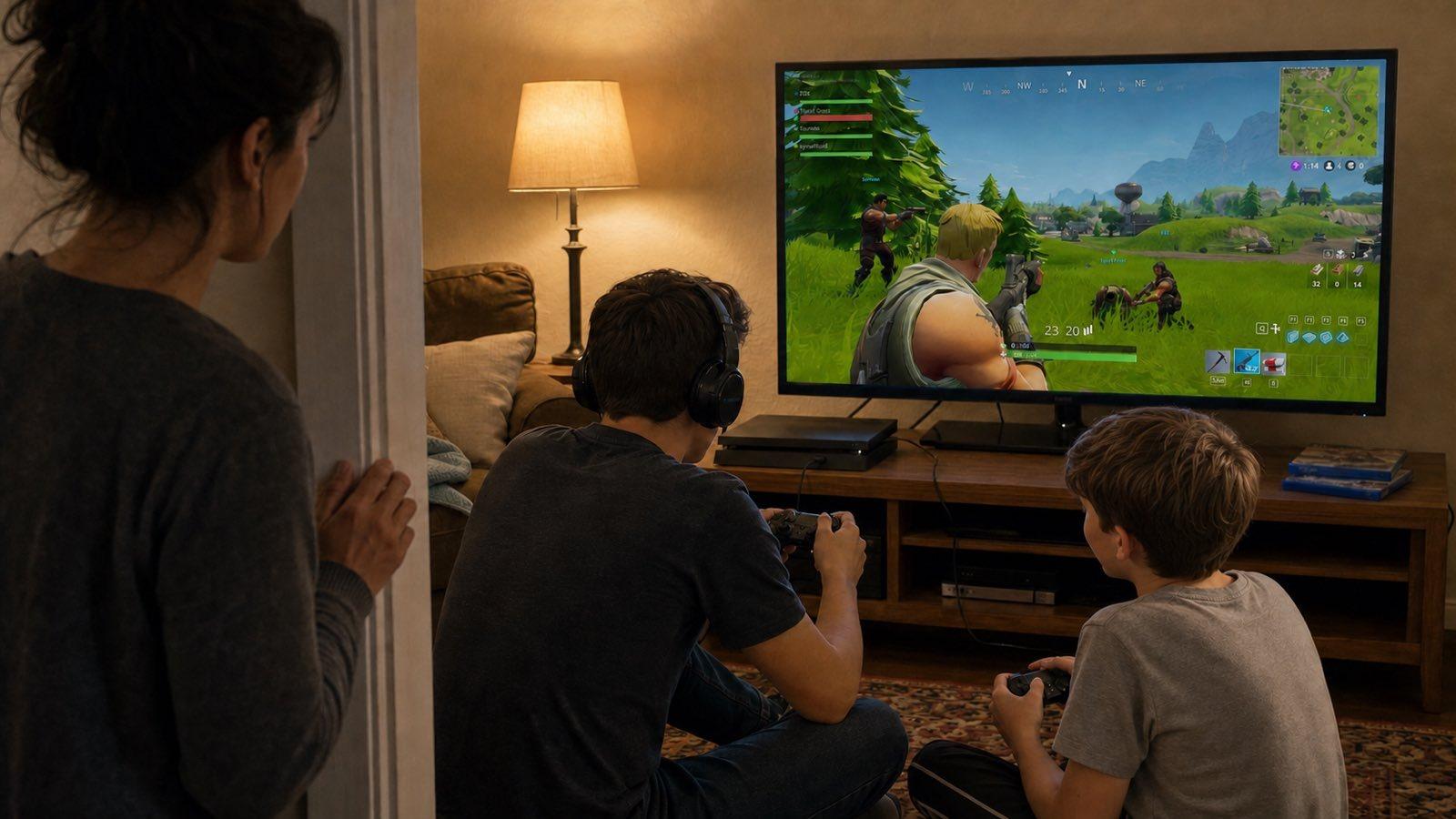
What filled the gap surprised me. Red Dead Redemption, a western with a Mature rating, became the game her very different sons played together. “That was one that they would play together,” she said. “It was more calming... it allowed them to bond and do something different together they enjoyed.”
Contrary to the rating expectations, the cartoon game with the dancing bananas is the one that got banned, and the M-rated western is what came in after, on good behavior. By the sticker on the box she got it backwards. By the evidence in her living room, calmer sessions, brothers voluntarily in the same world, she got it exactly right. Researchers who study siblings have seen the same mechanism: co-playing video games is associated with more sibling affection, which tracks with what she watched happen on her own couch.
What she was describing sounded really familiar, just from the other side of the screen. I was an orchestra kid. In the full class we were calm, pretty chill. Once the violas split off into sectionals, the same small room and the same faces every week, we went a little crazy in there, and that’s where we actually got close. I see it now in the kids I coach: the bonding happens in the small room, and the game is just what gets everybody in there. Her sons had found their sectional in a cowboy game.
Her one-line policy, the closest thing to advice she offered all conversation: “I see a value in it as long as it’s controlled.”
Why her kids begged their dad for a private Minecraft server
But the story of hers that resonated with me most was older and one that might sound familiar to many my age. In elementary school, her boys built a Minecraft world together: libraries, cities, churches. They built a workplace, and inside it a break room, stocked with snacks, so the workers would have something during their break. Little kids, planning for rest. “It wasn’t just the stuff, it was the narrative that they put behind it,” she told me. “Their world that they had built together from creativity.”
Then a stranger got in and wrecked all of it in one night. “Such a jerk move, and here’s these little kids actually doing something productive.” Her boys were devastated, and the fix they begged for tells you everything: they asked their dad to run a private server. A world with walls, and a trusted adult holding the keys.
Kids often can’t name a safe environment. They usually have to lose one first. I sat there nodding, because that lesson is my job: the kids I coach through EKUZO 101 play on a private, moderated server with the same faces, the same coach, and the same video and voice channel every week.
What she actually did
Nothing she did required an expert. It required watching, and being willing to act on what she saw.
She judged games individually, by the kid each one produced, and overruled the ratings sticker when her own eyes disagreed with it. She banned the one game that had rearranged her son’s behavior, then filled the hole it left on purpose: the family tried other games and held onto what gave something back, a western that made her boys brothers again, the block game where they’d built worlds since they were small. When the open internet cost her kids their best creative work, she didn’t take the game away; her family put an adult inside it.
Games weren’t the only thing she watched. “The only hard and fast rule was no social media, period,” she told me, and that rule held while her boys were growing up. So when her younger son needed his first account at 16, for school photography, the gate opened the way everything opened in her house: a real-world purpose, an older kid who vouched for him, and a written agreement posted on her wall. “I made him sign it.”
Three years after her ban, a Columbia University study found that addictive patterns of use, not total screen time, predicted worse mental health in young people. She’d already run the study in her own house, one game at a time.
I came into this interview expecting to explain gaming to the mom who banned Fortnite. I mostly listened. We were more similar than we were different. She learned what games do by taking one away and watching what came back, and what went missing. I learned it by playing. Two paths, same destination: parents like her aren’t behind on this stuff. They’re generating the evidence.
The listening project is ongoing. I’m trying to reach 100 of these conversations, and every one so far has taught me something the last one didn’t. If you’re a parent with a gaming story, good, bad, or unresolved, I’d genuinely like to hear it. Put 20 minutes on my calendar.
Casey is a real parent sharing her real story, offered so yours can use it.
Common questions
Should parents ban Fortnite?
A ban is a fair call when a child’s behavior keeps deteriorating around one game, which is what Casey watched happen: grounding her son from Fortnite only made getting back on it the point of everything else. What her experience adds is the half most advice skips. Before the game goes, try to identify what social or emotional role(s) the game was filling.
What happened after Casey banned Fortnite?
Two things, and she only expected one. The behavior settled and she got her son back. Then the second effect arrived, which no article had warned her about: her boys are quite different people, one a band kid and one not, and the game had been one of the few things they both wanted to do. The ban fixed what she aimed it at and emptied their common ground in the same move.
What should parents do after banning a child’s favorite game?
Fill the gap on purpose instead of leaving it to fill itself. Name what the game was actually providing, whether that is company, status, a way to wind down, or time with a sibling, then look for something that provides the same thing. In Casey’s house that meant another game her boys chose together. A moderated community or a shared family activity could do the same work.
Should parents judge video games individually instead of limiting total screen time?
It is what her house teaches, and it is worth holding as practical guidance rather than a clinical rule. The screen-time argument treats every gaming hour as the same hour. Casey found the opposite: one game rearranged her son’s behavior, another gave two brothers a way to be brothers, another was where they had built worlds together since they were small. She only found out by removing one and watching what went missing. A 2025 Columbia study points the same direction, finding that addictive patterns of use, rather than total screen time, predicted worse mental health in young people. One house and one study still do not settle it for yours.
Are video game age ratings enough to tell parents whether a game is appropriate?
Ratings describe the game’s content, not necessarily its behavioral effect on an individual child. Parents should consider both the rating and what they observe before, during, and after play when making decisions. The mature-rated western involved deep exploration in a true-to-life world, while the cartoon game with dancing bananas jumped players into fast-paced, designed chaos.
Sources and further reading
- Federal Trade Commission, Fortnite Video Game Maker Epic Games to Pay More Than Half a Billion Dollars over FTC Allegations of Privacy Violations and Unwanted Charges (December 2022).
- Coyne et al., Super Mario brothers and sisters: Associations between coplaying video games and sibling conflict and affection, Computers in Human Behavior (2016).
- Columbia University Irving Medical Center, Addictive use of social media, not total time, associated with youth mental health (2025).