
Why League of Legends is perfect for youth development

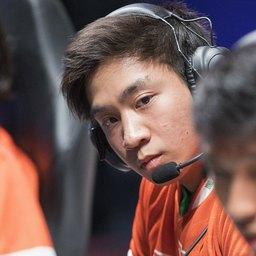
League of Legends is unusually strong for structured youth development. The game is deep enough to coach against, hard enough to grow young players, structured enough to teach roles, and culturally durable enough to outlast more than one cohort of kids. League is a 5v5 team strategy game with five defined positions (top, jungle, mid, ADC, support), over 170 playable characters, and a competitive grammar that has anchored a global professional league for over fifteen years. It rewards thinking ahead, pattern recognition, real-time decision-making under pressure, and trust between teammates. League isn't a shooter, which lowers the institutional barrier for many schools and families. Riot still runs the game like a flagship: regular patches in 2026, a six-region pro league, and a publicly announced engine modernization called “League Next” targeted for 2027. EKUZO built its coaching system around this game because it gives a coach the most surface area to teach against, and the right structure around the game turns a famously hard title into a developmental environment.
Is League of Legends really that toxic?
Most parents who hear about EKUZO get to the same question pretty fast: what games do you play? When I say League of Legends, the next sixty seconds usually go like this. They open a new tab, type “League of Legends” into Google, land on a Reddit thread about toxicity, scroll past a clip of someone raging in voice chat, and look up to ask, gently or not, “Are you sure?”
It's a fair question. The long answer:
League has a reputation, no doubt. Solo queue at peak hours can be a factory of sadness: strangers thrown together, no shared norms, frustration after a rough match, a chat that nobody is moderating. There's a decade of published research on it.
The same problem shows up anywhere kids are online without supervision. Most of an online childhood is unsupervised by default. League is the version that lights up search results because it's competitive and old enough to have research literature.
That's the opportunity. Getting your kid into a structured, coached online environment early, before they have a hundred hours of unmanaged solo queue, is one of the best moves you can make for how they show up online for the rest of their life.
Basketball meets chess
The cleanest way I've found to describe League to a parent who's never seen it: basketball meets chess in a virtual arena.
Like basketball, it's fast and spatial. Five players on a team. Real-time decisions. You rotate, read the floor, and know who needs help and when.
Like chess, every match starts with the same board and structure, even if your draft and opponents shift it. There's an opening, a mid-game, and a late-game. How you move your “pawns” matters early. How you trade resources matters in the middle. How you finish matters at the end. The structure is fixed. The dynamics inside it are not.
To an adult watching for the first time, League can look like five-on-five chaos. The structure is right there if you know what to look at. Five roles. A fixed map. Shared objectives the whole team has to fight for together. That's what we get to teach against.
What makes League the right game for a coaching system?
Five properties of the game make it the right home for what we do.
Strategic depth. League rewards thinking ahead, pattern recognition, and decision-making under pressure. That depth sustains long-term coaching the way basketball sustains a decade of practice. A coach is never out of things to teach.
Approachable mechanics.The floor is low. The ceiling is high. A 12-year-old who has never played can find their footing in a few sessions, and a player who's been at it for two years still has room to grow. A beginner and a veteran can be on the same team and both get something out of practice.
Stable roles and systems. Five clear roles, well-defined team structures, and role-specific success criteria make teamwork and leadership teachable. A coach can assign or rotate a role, and develop a player inside one.
Cultural durability.Riot is still patching the game in 2026, still running a six-region pro league, and is publicly building toward “League Next” in 2027. League shows no signs of fading.
It isn't a shooter. Fantasy combat in a fictional world lowers the institutional barrier for many schools and families.
Most other games hit one or two of these. League is the one we've found that hits all five.
What League gave me
I grew up playing League. I made friends through it before I made friends at school. I learned how to take a loss without letting it wreck the next hour. I learned to read a fast-moving situation, make a call inside thirty seconds, and live with the call when it didn't go my way.
League taught me more than school did. I want to be careful with that line because school mattered. Teachers mattered. What I mean is specific. League put me inside a live system where decisions had consequences inside of a minute. I'd watch a teammate change over forty minutes from someone I'd never met into someone I'd defend. I'd make a bad call, eat the loss, and need to be ready for the next play before I'd finished feeling sorry about the last one. The game graded me in real time, then asked me to keep playing.
By the time I was an adult, esports had paid for college and I'd built a life around what the game had given me. Friends. A community. An identity. A way of thinking. EKUZO came out of that. I wanted other kids to get the good parts on purpose, not by accident the way I did.
League is like life
League is like life. I mean that more concretely than it sounds.
You can't pick every teammate. You'll communicate with people you didn't choose. You'll make a mistake and have to recover while the game keeps moving. Sometimes your job is to lead. Sometimes your job is to support. Sometimes your job is to make sure the person beside you wins instead of you.
Blame is the easy move. Asking what you'd do differently next time is harder. That's the part most people miss about League. It's a live laboratory for the same dynamics that show up at work and in relationships: reading a room, calling a play, knowing when to lead and when to follow, recovering from a bad decision, supporting someone having a worse night than you.
Why not Fortnite, Minecraft, Roblox, or VALORANT?
I get this question a lot, and I want to answer it without picking on those games.
Fortnite is great for improvisation. Minecraft is one of the best creative environments of the last twenty years. Roblox is where a lot of kids first learn how to be social online. Rocket League is school-friendly and easy to onboard. VALORANT and Overwatch teach team play in their own right. Smash teaches mastery. Each one can be a good thing in the right hands. I wouldn't argue with a parent whose kid loves any of them.
We're not asking your kid to stop playing what they already play. Our sessions take a few hours a week. The rest of the week, they can play Fortnite, Minecraft, Roblox, whatever brings them joy, often with the new friends they make on our roster.
The skills work both ways. What a kid learns inside coaches sessions (map awareness, calling a play, recovering from a bad fight, knowing your role on a team) usually shows up in whatever else they play that week. A kid who gets better at League gets better at Fortnite too.
Here's how I think about it. Most of a kid's growth in any program comes from a small share of the inputs. We meet students through the games they love, and we teach through the game where the inputs compound: structured roles, teachable team dynamics, depth that sustains a real season. League is the game I've spent serious time inside where a coach is never out of things to teach.
That's the bar we needed to clear. League clears it.
Why do kids love League of Legends?
Structure, strategy, depth, transfer; none of that is what makes a 13-year-old fall in love with the game.
Kids fall in love with the champions. Over 170 of them, each one a different identity. A quiet kid might pick a support whose job is to keep the team alive. A kid who likes to lead gravitates to mid lane and ends up shotcalling. A kid who likes precision picks an assassin and lives with the consequences. A kid who likes drama picks Yasuo and learns about humility the slow way. Riot's champions page is a roster of personalities, and most kids find one that feels like theirs.
If a kid is already drawn to fantasy worlds, League feels familiar before they ever queue a match. The art is anime-influenced. The champions, abilities, lore, and mythology overlap heavily with Dungeons & Dragons, which is having its biggest moment in a generation right now, helped along by school clubs and Stranger Things. A kid who's into anime, cosplay, KPop Demon Hunters, or a D&D group usually steps into League easily. The aesthetic vocabulary is already theirs.
And the universe around the game keeps growing. Worlds is one of the biggest spectacles in sports. The 2025 final peaked at 6.75 million concurrent viewers. Arcane, the animated series set in League's world, hit number one in over 60 countries. Fortiche, the studio that made Arcane, is developing more animated series in Noxus, Ionia, and Demacia. Riftbound, the official trading card game, launched globally in October 2025, with new sets shipping every quarter. 2XKO, the 2v2 fighting game, arrived on PS5 and Xbox in January 2026. League is a universe a kid can live in.
One more thing I think kids love. The game makes progress visible. You can see yourself getting better, and you can see your champion getting better with you. With over 170 champions and a half-dozen viable styles per role, there are a lot of ways to be different in League and still belong on the team.
What did the Jynxzi tournament teach us about League?
Karlin's live reaction to the Jynxzi tournament: community is what you make of it.
In May 2026, a streamer named Jynxzi ran a creator-led League tournament with MrBeast, Tyler1, Doublelift, xQc, Ludwig, and forty other major creators. Over 920,000 people watched it live. The viewership was real. The format mattered more.
The strongest players were placed in a “Challenger Role.” They had to play support-style champions whose job is to help teammates rather than carry the team. The best player on each squad couldn't be the star. They had to guide, support, communicate, and make four other people better.
The game changed. Teaching moments became the dominant story. The strongest players spent the night being the most patient ones. The casual creators got better in real time because someone strong was helping them play.
Same game. Different structure. Different outcome. Format shapes behavior, and that's the bet EKUZO makes.
How does EKUZO handle League's toxicity problem?
Solo queue is the problem. So we don't use it.
Our players are on stable teams with the same teammates week after week. Coaches are in voice during sessions. We set communication norms before the match starts and review them after. We use Riot's behavior systems (Honor levels, communication restrictions, mute and report tools) deliberately, and we tell players what each one does. We review matches together, including the moment someone got frustrated. We treat emotional regulation as part of practice, the same way a good football coach treats composure as part of practice.
A factory of sadness, with adults in the room, becomes something else.
The game is the arena. The system is the work.
League is hard. That's part of why we picked it. Hardness only teaches when it's calibrated to where the player is, which is what coaches do. Hardness with no structure shows up as frustration. With the right structure around it, the same hardness produces a player who can communicate under pressure, recover from a bad call, carry a role on a team, and finish a loss already thinking about the next match.
League is the arena. EKUZO is the system around it: coaches, stable teammates, set expectations, post-match reflection, moderated communication, and adults who understand the game well enough to teach against it. The full set of teaching principles lives on our methodology page.
If you've never played a video game in your life, you don't have to know the rules to see what the game asks of a player. If your kid isn't sure they're good enough yet, they don't have to be skilled to belong here. They need a role, teammates, and a coach who pays attention. The rest they'll build.
If you want to see what this looks like in practice, our camps are running all summer. We wrote a longer guide on that too.
FAQ
Is League of Legends toxic? Yes, in unmoderated solo queue with strangers. The same is true of any unmanaged online space your tween or teen enters. Riot's behavior systems (Honor levels, communication restrictions, automated detection) keep repeat-offense rates under 10% inside the same year, but the platform tools alone don't fix it. The reliable way to lower the risk for a young player is structure: known teammates, a coach in voice, post-match reflection, adults in the room.
Is League of Legends appropriate for kids? League is rated ESRB Teen for fantasy violence. It isn't a young children's game, and the rating is honest about that. The combat is set in Runeterra, a fictional world with swords, magic, dragons, and champion abilities that obviously don't exist outside the game. For many families and schools, that's a different conversation than a game with realistic firearms or modern military settings. We run League as a coached team activity with adults in the room.
Why does EKUZO use League instead of Fortnite, Minecraft, or Roblox? Any game could support coaching in theory. The question is which game gives a coach the most to teach against. League hits five things at once: strategic depth, approachable mechanics, stable roles, cultural durability, and a non-shooter format. Most other games hit one or two. League is the one we've found that hits all five.
What skills can League help players practice? Communication under pressure, decision-making with incomplete information, recovering from mistakes, playing a defined role, supporting teammates, and reflecting on performance. The transfer is visible at the high end too: Jane Street, a quantitative trading firm, uses video games and Go to train its engineers to keep a level head under pressure. Demis Hassabis, the Nobel-winning CEO of Google DeepMind, credits chess and game design as foundational to how he thinks about AI. 65% of competitive college esports players are STEM majors, with graduation rates above the general student population. The same cognitive substrate that produces a high-level gamer often produces a high-functioning operator.
Does my kid need to already know League? No. Many of our players are new to it. We start with beginner-friendly champion pools, role scaffolding, and small-team scrims so a new player can find footing before competition gets serious.
Karlin Oei is the founder of EKUZO. He grew up playing League of Legends, paid for college through esports scholarships, and now builds the coaching system he wishes he'd had as a kid.



