
Virtual summer camps for kids who'd rather be gaming (still open for summer 2026)

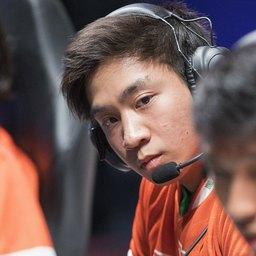
Summer break is days away in most of the country and your kid wants one thing: more time on whatever they're playing. Fortnite, Roblox, Minecraft, Smash Bros, Rocket League, or whatever's the obsession this week. There are real summer camps still open for 2026 that work for that kid, and a handful of them are genuinely developmental. Four categories are worth knowing about: game-design and coding camps teach kids to build the games they already play; creation-focused gaming camps drop kids into Minecraft or Roblox worlds with light instruction; university and in-person “esports” camps offer supervised play with peers on a college campus; structured esports camps put kids on a real squad with a coach who teaches the game. The right pick depends on whether your kid wants to play, build, hang out, or grow. This guide walks each category, names representative camps, and explains which kid each one fits.
How do I decide which kind of summer gaming camp fits my kid?
Start with what your kid actually wants out of game time. Some want to make games. Some want to build worlds inside Minecraft or Roblox. Others want to be around peers, playing freely with new friends. And then there's a different kid: the one who plays a lot, loves it deeply, and hasn't found anyone who takes it seriously with them yet.
The second filter is the type of supervision you're buying. Most camps run with adult counselors whose job is keeping the room calm and the kids on schedule. A smaller set runs with actual expert coaches who play and teach the game at a high level. Those two look the same on a website. They are very different experiences for the kid.
A simple mapping:
- Wants to make games → game-design and coding camps
- Wants to build worlds inside Minecraft or Roblox → creation-focused gaming camps
- Wants to be around other kids playing games in person → university and in-person “esports” camps
- Plays a lot, loves it deeply, hasn't found their squad yet → structured esports camps
What are the four categories of summer gaming camps in 2026?
Game-design and coding camps (learn to build)
Kids spend the week building their own games using tools like Scratch, Unity, Roblox Studio, or Minecraft modding. The output is usually a playable game by Friday. The day is structured like a class with project blocks, instructor demos, and small group work.
Representative camps include iD Tech Online, Black Rocket, Code Ninjas Camp, and CreatorCamp. Formats and prices vary widely. CreatorCamp runs 2-day camps from $150 for ages 5-13. iD Tech Online runs full-week classes of around 25 hours for $800-$1,200. The high end gets you more class hours and a tighter ratio (usually 1:6 to 1:10).
Best fit: kids who get curious about how games work and want to make their own.
Honest weakness: if your kid wants to play this summer, building is a hard sell. Read the description carefully. “Game design camp” sometimes means coding camp with a gaming theme.
Creation-focused gaming camps (Minecraft and Roblox worlds)
Sandbox-style camps where kids build worlds, contraptions, and mini-games inside Minecraft or Roblox. Less code-heavy than the design category. Lots of in-game peer collaboration on shared builds.
Representative camps include Connected Camps (Minecraft), Outschool's Minecraft and Roblox clubs, Black Rocket's Roblox Studio sessions, and CreatorCamp's Roblox Game Masters and Minecraft Modders tracks. Most run 5-15 hours of instruction per week for $100-$400.
Best fit: kids who already lose hours making things in sandbox games.
Honest weakness: real team dynamics are rare. Most camps in this category are parallel play with light coaching. Kids walk away with a build, not necessarily with teammates.
University and in-person “esports” camps (supervised play with peers)
In-person day camps run on a college campus or community center where kids spend the week playing a rotation of games (often Smash Bros, Rocket League, Fortnite, Mario Kart, sometimes League) in a supervised lounge. Light instruction, social atmosphere, drop-off and pick-up model.
Representative camps include UT Austin Esports Summer Camp, UT Dallas Summer Gaming Camps, UT Arlington Esports Camps, and Ohio State Esports Summer Camp. Day camps typically run 5-7 hours per day for $300-$600 a week, with student-staff ratios around 1:15 to 1:25.
Best fit: parents who want their kid out of the house, around peers, and trying new games in person.
Honest framing: these are marketed as “esports camps,” but the structure is closer to a supervised gaming hangout than a competitive program. The adults running the room are usually student staff whose job is moderation, not coaching. If your goal is getting your kid into a real social environment around games, that's the right shape. If you want skill development, the next category is what you want.
Structured esports camps (real squads, expert coaching)
Kids join a small squad, train with a coach who actually plays the game at a high level, and end the camp with some kind of culminating competition. The model is the same as a sports team. Sessions are usually a half-day, with a coach present throughout. Ratios matter here more than in any other category, and they vary a lot.
Representative camps include EKUZO Camps, NXT UP League of Legends Esports Camp, Skillshot Esports Academy, and IMG Academy Esports (which runs its 2026 camp in partnership with the pro org M80). EKUZO runs a virtual half-day at a 1:5 coach-to-player ratio for $199 per week, which works out to roughly $13 per hour of dedicated top-1% coaching. IMG runs an on-site residential week in Florida with pro coaches at around 1:10 for roughly $1,900. NXT UP runs a weekly virtual program for ages 7-15 in League specifically.
Best fit: kids who're ready to take the thing they already love a little more seriously, or kids whose parents see something more in the hobby than just play.
Why this category produces the most transferable skills: communication, accountability, handling losses, leading peers all get forced by the structure. Same reason traditional team sports work, applied to the game your kid already loves.
Honest weakness: structured esports camps focus on team-based competitive games like League of Legends, Valorant, Rocket League, or Counter-Strike. If your kid's main thing is solo exploration in MMOs or single-player RPGs, this isn't the category that fits them.
Quick comparison: cost and what you actually get
| Category | Cost per week | Hours per week | Coach type |
|---|---|---|---|
| Game-design and coding | $150–$1,200 | 10–30 | Instructor |
| Creation (Minecraft/Roblox) | $100–$400 | 5–15 | Counselor |
| University “esports” day camps | $300–$600 | 25–35 | Student staff |
| Structured esports camps | $199–$1,900 | 15–30 | Expert coach |
Why League of Legends, and why it's having a moment in 2026
Worth answering because most structured esports programs (including EKUZO Camps) coach in League of Legends, which surprises parents whose kids play Fortnite or Roblox or Minecraft. The short version: League is the chess of esports, it shares a lot of cultural DNA with games and stories your kid probably already likes, and the community is in a real moment right now.
Start with the game itself. Five roles, one map, a playbook that evolves every match. The game has 170+ champions, each with their own ability kit, and near-limitless playstyles between them. It rewards memory, pattern recognition, communication, and live decision-making in a way few competitive games can match. The depth is why pros train it for years and why a 12-year-old can keep finding new things to learn after their thousandth match.
For kids already drawn to fantasy worlds, League feels familiar. The art is anime-influenced. The champions, abilities, lore, and mythology have a lot in common with Dungeons & Dragons, which is having its biggest moment in a generation right now, helped by school clubs and Stranger Things. A kid who's open to either of those aesthetics usually finds League easy to step into. The audience is growing too: college esports programs, scholarship dollars, and Twitch viewership are all up year over year.
The clearest proof of this lately: on May 11, 2026, the streamer Jynxzi hosted a 40-creator League tournament that paired top-ranked players with people who'd never opened the game. The event pulled 920,000 concurrent viewers, out-drawing most of the professional esports leagues that ran the same week. Jynxzi called it the most locked-in he's ever been gaming. The format showed the thing parents most want to know: the game works at every skill level when the structure invites it.
The skills also move sideways. Map awareness, calling out a play, recovering from a bad fight, leading a teammate. Those are the things every game your kid plays rewards too. Fortnite. Rocket League. Valorant. Even Roblox group play. Your kid plays Fortnite, or Roblox, or Minecraft. That's exactly the kid EKUZO Campsis built for, because what we teach in League shows up in whatever they're playing the rest of the week.
We wrote a longer post on why League of Legends works for youth development. It goes deeper on the toxicity question and what coached play teaches kids.
What does a week at EKUZO Camp actually look like?
EKUZO Camps are built for the kid who loves games more deeply than the people around them realize. The kid who hasn't found their squad yet, or hasn't been shown that their passion can become something more than casual play.
The format: half-day, virtual, your kid plays from home. No drop-off, no driving. Monday through Thursday, your kid trains with the same squad of 5 teammates and one top 1% coach. Friday, the squad plays other EKUZO squads from across the United States in a competitive tournament.
Here's where our coaches do different work from most. They teach the game first. Concepts like map awareness, wave management, team communication, when to fight and when to back off. Then they hand the decisions back to your kid. The kid plays. The coach watches and asks questions afterward. “What were you thinking on that play? What did the other team see? What would you do differently?” The point is the kid building their own decision-making, not the coach piloting matches from the sideline. Same reason a great soccer coach doesn't tell a 12-year-old where to pass every five seconds.
I started EKUZO because my 10-year-old self desperately needed it. I loved playing games. I never had a coach. I never had a consistent squad I could learn and grow with. Camp is the thing I wish someone had built for me.
Camps run weekly from May 18 through August 8, 2026. Sign up solo and we'll match your kid into a squad. Sign up with friends and you can stay together. Weeks are $199 (limited-time pricing, original price $299). Most weeks still have open slots.
How do I sign up before the next week starts?
Three steps. Pick a week from the camps schedule. Decide if your kid wants to sign up solo (we'll match them) or with friends (they stay together). Register. You'll get a welcome email with what your kid needs (computer, mouse, headset, internet) plus a coach intro before your kid's first session.
If you have questions about whether your kid is a fit, the camps page has the format details, common parent questions, and a way to talk to the team.
If your kid would rather spend the summer gaming, that's a starting point, not a problem to fix. The right camp meets them where they already are and builds the community, the coach, and the challenge around it. That's what every great summer experience does. The medium changes; the shape stays the same.
— Karlin, founder of EKUZO



