
When gaming helps homeschool kids and when it hurts
The difference is rarely the game. It’s what surrounds it.

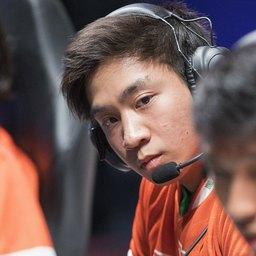
For a homeschooled kid, gaming can build focus, friendships, and a reason to get out of bed in the morning. It can also swallow the day and shrink the world down to a screen. The same game can do both, which makes this hard to think about clearly. What usually decides the direction is the environment around the game. Unsupervised, open-ended, isolated play can drift toward the spiral parents fear. Social, coached, goal-directed play with an adult nearby tends toward the growth they want. The number of hours matters, but it's not the first thing I'd look at. I'd look at what surrounds those hours. That's especially true in a homeschool, where gaming is often a kid's main social world and you, the parent, own the whole day. Here's how I'd weigh the opportunity and the risk, and how to tilt your kid toward the better outcome.
Why does this hit homeschool families differently?
Every parent feels some version of this. Most of us put screen time near the top of the worry list, and plenty of us quietly wonder if we're getting it right. If that's you, you're not failing. You're carrying a piece most families quietly hand off to a school.
For homeschool families the stakes sit a notch higher, because the default structure isn't there. A kid in school has a built-in peer group, six hours of routine, and a schedule that caps the day before a screen can. A homeschooled kid has none of that automatically. You build the day. So when gaming shows up, it often becomes the biggest block of free time and the main social channel at once.
That's actually the strongest card homeschooling holds. You have more control over the environment around the game than any school ever will. Most parents just never get told that the environment is the lever.
I recently read a long Facebook thread where homeschool parents were working through exactly this. What made it worth reading is that it wasn't polished. It was 200+ parents saying the quiet parts out loud. I broke down the whole conversation in a companion piece. Here I want to use what they taught me to answer the question they were all circling.
Where's the real opportunity in gaming?
The opportunity is real, and I don't say that as a gamer making excuses for the hobby. Played with structure, games are one of the few places a kid will voluntarily practice hard things: reading a fast-moving situation, communicating under pressure, recovering from a loss and lining up to try again, working with other people toward a goal bigger than themselves.
The parents who've figured this out stopped trying to shrink the passion and started aiming it. In that thread, the families whose kids were thriving had them in coding classes, game-design courses, esports teams, and streaming with a purpose. One mom said her son “wouldn't have gotten past his deep depression and anxiety” without it, and that the game and the people in it taught him to communicate. Another said that once gaming became “work,” meaning it had a goal and a structure, the six-hour days fell off on their own.
Homeschool families are well positioned to join that camp, because the day has room for it. A coding block at 10am is a normal Tuesday for you. It isn't for a school family.
What does the risk actually look like?
The risk is just as real, and the worried parents aren't wrong. I've read Glow Kids by Nicholas Kardaras and The Anxious Generation by Jonathan Haidt, and the parents who cite them are pointing at something true. Open-ended, unsupervised gaming can pull a kid inward. In that same thread, parents described kids who only ate while gaming, who wouldn't shower, whose whole friend group lived inside a game they couldn't step away from.
But the line that stuck with me came from a homeschool dad whose two boys game as their main social outlet. When other parents told him to just take it away, he wrote that taking it away “without a solid alternative can lead to serious emotional distress, including depression.”
He's right, and it's the part both loud camps miss. For a lot of these kids, the game is where their friends actually are. Pulling it without a replacement does something bigger than cutting screen time. It takes the kid out of their whole peer group.
When gaming goes sideways, I usually see the same pattern: no adult anywhere near it, no stable group of real people, no goal, and no off-ramp. That's the profile, and you'll notice the game itself isn't on the list.
Game choice still belongs in the picture. We don't pretend every title is equal, and we don't coach shooters. The games worth building anything around reward teamwork, strategy, and creativity. You can hold that line at home as easily as we do.
The same game can grow a kid or shrink their world. What surrounds it usually decides which.
So what actually decides it?
If the same game can go either way, what tips it? The research here is still early, but it points where a lot of parents already sense things land: the total hours matter less than the pattern, the people, and the structure around them.
A 2025 study from Columbia and Weill Cornell found that addictive patterns of use predicted worse mental health in kids, while total screen time on its own did not. When researchers look at what produces real growth in structured gaming programs, the gains trace back to a person more than a feature: a caring adult, the coach.
Six hours moving in five directions is just motion. Structure points that effort at something, and that's when it starts to add up. The people and the structure are the active ingredients. The game is what gets a kid in the door.
What can you do at home?
A few moves do most of the work:
- Put an adult in the room, or on the voice channel. The risk concentrates in unsupervised play, and presence changes how kids behave, even quiet presence.
- Keep the same people over time. Showing up repeatedly with the same group around a shared interest is how social development actually happens, and it's exactly what a steady team is. It beats random matchmaking with strangers, for friendship and for safety.
- Give it a goal. Practicing toward something, a match, a project, a skill, is what turned “six hours a day” into “an hour with a point” for several parents I read.
- Choose the games on purpose. Co-op, strategy, and creative titles reward what you want to grow. You don't have to allow the ones that don't.
- Talk about it after. “What would you do differently next game?” is a better question than “how long were you on?” The reflection is where a loss becomes a lesson.
That last one is small, and it's the one most parents skip.
What this looked like in one real life
I'm not making the structure argument from theory. I'm the kid it happened to.
School nearly lost me. I barely graduated, my grades were bad, and I was the definition of unmotivated. The one odd data point was a standardized test I landed in the top 1% on, which told everyone I was capable and made the rest of it more confusing. I got into college, but almost failed out.
Then I found a League of Legends team, and that's what turned it around. For the first time, effort had a point and other people depended on it. Competitive play doesn't let you coast. A bad call loses your team the round in under a minute, with four teammates watching. You learn fast to eat the loss, drop the self-pity, and line up the next play. The pressure to get better came from the game itself, and from teammates who needed me to be good. That team paid for my college too: $80,000 in esports scholarships, the same way another kid earns one for football or track. The ability was there the whole time. It sat dormant until an environment gave it stakes and a team.
I wasn't homeschooled. But I'm exactly the kind of capable kid a one-size system loses, the kind a lot of you pulled out of school because you could see it happening in real time. The game opened the door. The team, the standard, and the people around it are what actually changed me.
So what does gaming done well look like?
Read those 200+ parents closely and you see what the fight is really about: structure, belonging, and what it takes for a kid to grow up. Almost all of them are describing the same missing thing without naming it. The dad I mentioned wanted a “solid alternative” and assumed none existed. The cut-it-off camp couldn't picture an option besides removing the console. The aim-it camp was stitching together coding classes and course listings because nothing coherent existed to point at.
What they're all circling is structured, social, supervised gaming with adults who actually coach. A kid plays the game they already love, on a real team, with a coach who cares whether they're also reading books and resetting well after a tough loss. That's the version that grows a kid and calms the risk at the same time.
Karlin breaks down armor vs. magic resist — a League of Legends concept many players miss for years, and why kids benefit from learning it early.
That's what we built EKUZO to be: stable rosters, trained coaches, clear goals, moderated spaces, and a conversation after the match. You can build a version of that at your own kitchen table. We're one place that does it, if you want the help. If you'd like to try it without a big commitment, EKUZO100 is a one-month trial that puts your kid on a coached team for $100.
One honest caveat
I don't want to oversell structure. For some kids, especially when gaming has already tipped into something compulsive or is masking real distress, a break and a conversation with a professional come first, and structure comes after. If your kid has stopped eating, sleeping, or leaving their room, that's past the reach of a blog post. Structure helps most kids. It doesn't replace help when help is what is needed.
For everyone else, the takeaway is simpler than the debate makes it sound. If you're trying to decide whether to restrict your kid's gaming, redirect it, or build something better around it, start with the environment. That's usually where the answer is.
A game gave me a team, and the team gave me everything else. Most kids have that in them too. They just need an environment that calls it out.
Want the full conversation those 200+ homeschool parents had, all three camps and the quotes on every side? I broke it down here.
Sources and further reading
- Addictive use vs. total screen time: Columbia / Weill Cornell, 2025
- The coach as the active ingredient in esports social-emotional growth: Connected Learning Lab, UC Irvine
- Team chemistry over star power: Gisbert-Pérez et al., Current Psychology, 2024
- Structure and social support in competitive players: Trotter et al., Frontiers in Psychology, 2021
- Online and offline friendships overlap and reinforce each other: Frontiers in Developmental Psychology, 2024
- Adult-relationship growth in coached programs (12.2% to 23.5% in one year): NASEF / UC Irvine
- Most parents prioritize managing screen time: Pew Research, 2025
Karlin Oei is the founder of EKUZO. He grew up playing League of Legends, paid for college through esports scholarships, and now builds the coaching system he wishes he'd had as a kid.



